 Vertex Learn
Materials: natural or made, and how they bend and break
What this lesson covers
- Every material takes up space, even air
- Natural materials and manufactured materials
- How different materials act when bent, stretched or handled
- Materials broken into small pieces are still the same material
- Predicting, testing, and putting results in a table
Materials take up space
- Everything is made of materials, and every material takes up space.
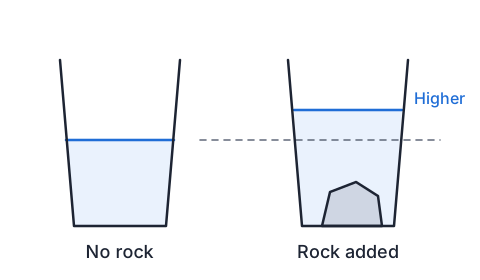
- Drop a rock into a cup of water and the water level goes up, because the rock needs room.
- Air is a material too. Blow up a balloon and it gets bigger, because the air inside takes up space.
Natural or manufactured?
- A natural material comes from plants, animals or the ground.
- A manufactured material is made by people, often from natural ones.
- Paper is made from wood. Glass is made from sand. Bricks are made from baked clay.
| Natural | Manufactured |
|---|---|
| Wood | Paper and cardboard |
| Rock | Brick |
| Sand | Glass |
| Wool | Plastic |
Sorting four materials
- Is each one natural or manufactured: a wool jersey, a plastic bottle, a brick, a pebble?
- Wool: grows on sheep, so naturalfrom an animal
- Plastic: made in a factory, so manufacturedmade by people
- Brick: clay baked by people, so manufacturedchanged by people
- Pebble: found on a beach, so naturalfrom the ground
- Natural: wool, pebble. Manufactured: plastic, brick
Try it: natural or manufactured?
Bend, stretch, squash
- Materials act in different ways when you handle them.
- Rubber stretches, then springs back to its shape.
- Paper bends and folds easily, and it tears if you pull hard.
- Wood bends a little, then snaps if you push too far.
- Glass, brick and rock do not bend. If you push too hard, they crack.
Predict, then test
- Room 7 predicted what 5 materials would do when bent, then tested each one gently and filled in a table.
- Each row is one material. Each column is one thing they wrote down.
| Material | We predicted | What happened |
|---|---|---|
| Rubber band | Stretches | Stretched and sprang back |
| Paper strip | Bends | Bent and folded |
| Ice block stick | Bends | Bent a little, then snapped |
| Plastic ruler | Snaps | Bent and sprang back |
| Cardboard | Stays stiff | Bent and made a crease |
- Rubber band and paper strip: as predictedright
- Ice block stick: it bent first, then snappedpartly right
- Plastic ruler and cardboard: not as predictedwrong
- The test, not the guess, shows what a material really does
Try it: what happened when it bent?
Breaking into smaller pieces
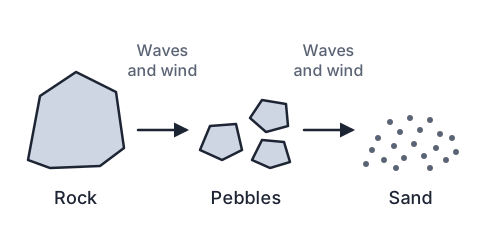
- Materials can be cut, broken or worn down into smaller pieces.
- The small pieces are still the same material.
- Sand is rock that waves and wind have worn into tiny grains over a very long time.
- Breadcrumbs are still bread. Broken glass is still glass, and its small pieces are sharp.
Common mistakes
- Air is nothing, so it does not take up space.Air is a material; a balloon gets bigger as you blow air in because the air takes up space.
- Paper is natural because it comes from trees.Paper is made from wood by people in a factory, so it is manufactured.
- When rock turns into sand, the rock is gone.The rock is still there as tiny grains; breaking a material makes smaller pieces of the same stuff.
A bend and stretch test
You need: a rubber band, a strip of paper, an ice block stick, a piece of tinfoil, paper and a pencil
- Draw a table with three columns: Material, I predict, What happened.
- For each material, write what you think it will do when you bend it.
- Bend or stretch each one gently with both hands.
- Write what happened in the last column.
- Look for this: which ones sprang back, which stayed bent, and which broke?
Safety: Ask an adult to help, and bend things below your face and pointing away from people, because a snapping stick or flicked rubber band can hit an eye.
Your turn
1
Is wool natural or manufactured?
2
Is a brick natural or manufactured?
3
In Room 7's test, what happened to the ice block stick?
4
You crush a cracker into crumbs. Are the crumbs still cracker?
5
Does the air in a balloon take up space?
Show answer
1. Natural, because it grows on sheep. 2. Manufactured, because people bake clay to make it. 3. It bent a little, then snapped. 4. Yes, they are smaller pieces of the same cracker. 5. Yes, which is why the balloon gets bigger.
Recap
- Every material takes up space, even air.
- Natural materials come from plants, animals or the ground; manufactured materials are made by people.
- Materials act differently when bent or stretched: some spring back, some stay bent, some break.
- Broken pieces are still the same material.
- Predict, test, and record the results in a table.
The maths behind it
Report a mistake
How is Year 2 maths going?
See the Year 2 maths guide