 Vertex Learn
Food and nutrients: what your body needs and why
What this lesson covers
- Your body needs nutrients to move, grow and heal
- Carbohydrates give energy, and fats store energy
- Proteins build and repair the body
- Vitamins and minerals keep the body working well, and water is needed every day
- Sorting foods by the main nutrient they give
- Putting together a balanced meal
Why we need food
- Food gives your body nutrients.
- Nutrients are the useful things in food.
- Your body needs them to move, to grow, and to fix itself, like when a cut knee heals.
- Different foods give different nutrients. So we need lots of different foods.
Carbohydrates: energy
- Carbohydrates give you energy to run, play and think.
- Bread, rice, pasta, oats, potatoes and kūmara have lots of carbohydrates.
- Vegetables and grains are good places to get them.
Proteins and fats
- Proteins build your body and fix it when it is hurt.
- Meat, fish, eggs, beans, nuts and milk have protein.
- Fats store energy and help keep you warm.
- Oil, butter, avocado, meat and seeds have fat.
- We need some fat, but not too much.
Vitamins, minerals and water
- Vitamins and minerals help every part of your body work well.
- Fruit and vegetables have lots of them. Meat, nuts and seeds have some too.
- Calcium is a mineral in milk and cheese. It helps build strong bones and teeth.
- Water is in every part of you. Drink water every day, and more when it is hot or you are running around.
Try it: what does each one do?
Example: sort the food
- Most foods have more than one nutrient. We sort each food by the one it has most of.
- Which main nutrient does each food give?
| Food | Main nutrient |
|---|---|
| Potato | Carbohydrate |
| Fish | Protein |
| Butter | Fat |
| Orange | Vitamins |
| Nuts | Protein and fat |
- Potato: a starchy vegetable, so carbohydrate
- Fish: builds muscles, so protein
- Nuts have lots of two nutrients, so they go in two groups
Try it: sort the food
Example: make a lunch balanced
- One easy guide: fill half your plate with vegetables and fruit, a quarter with carbohydrate and a quarter with protein, and drink water.
- Tama's lunch is a white bread roll and a fizzy drink. Is it balanced? What could he add?
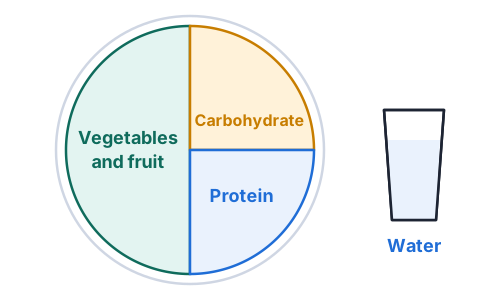
- Bread roll: carbohydrate
- Fizzy drink: lots of sugar, no other nutrients
- Missing: protein, vegetables and fruit, and water
- Not balanced. Add an egg or ham, carrot sticks and an apple, and swap the fizzy drink for water
Common mistakes
- Fat is bad for you, so we should eat none.Your body needs some fat for energy and warmth; we just should not eat too much.
- Fruit juice is just as good as water.Juice has lots of sugar in it; water is the best drink for your body.
- Each food has only one nutrient.Most foods have several nutrients; we sort a food by the one it has most of.
Find the fat with paper
You need: a brown paper bag, scissors, a pencil, a little butter, a slice of apple, a slice of cheese, a cracker
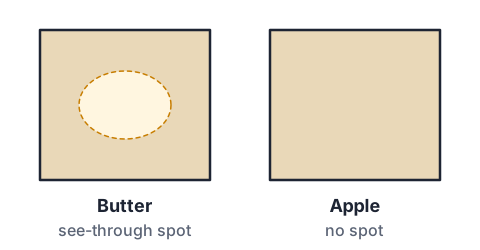
- Cut the paper bag into four squares. Write a food name on each square.
- Rub a little of each food on its own square.
- Leave the squares for 10 minutes so any water can dry.
- Hold each square up to a window.
- Look for a see-through, shiny spot. That spot means the food has fat in it. Water dries and leaves no spot, but fat stays.
Safety: Ask an adult before using food from the kitchen and for help with the scissors, and wash your hands after touching the greasy paper.
Your turn
1
Rice gives you energy. Which nutrient does it have most of?
2
Which food helps build and fix your body: bread, fish or an apple?
3
Which nutrient does butter have most of?
4
What is the best drink on a hot day?
5
A lunch is a pie and a fizzy drink. What is missing?
Show answer
1. Carbohydrate. 2. Fish, because it has lots of protein. 3. Fat. 4. Water. 5. Fruit and vegetables (vitamins and minerals), and water.
Recap
- Nutrients in food help you move, grow and heal.
- Carbohydrates give energy; fats store energy and keep you warm.
- Proteins build and repair your body.
- Vitamins and minerals keep your body working, and you need water every day.
- A balanced meal has some of each: lots of vegetables and fruit, some carbohydrate, some protein, and water.
The maths behind it
Report a mistake
How is Year 3 maths going?
See the Year 3 maths guide