Order of operations, rounding and remainders
What this lesson covers
- Rounding, estimation, and using benchmarks support comparing numbers and checking whether findings are reasonable.
- Division can result in a remainder expressed as a whole number, fraction, or decimal.
- In expressions that have more than one operation, the order of operations is important.
- A mnemonic, such as GEMA: grouped, exponents, multiplicative (× and ÷), and additive (+ and −) can be used to remember the order.
Is 3 + 4 × 5 equal to 35 or 23?
- Work left to right and you get 35.
- The answer is 23.
- And every calculator in the world agrees.
| Method | Working | Gets |
|---|---|---|
| Left to right | 3 + 4 = 7, then 7 × 5 | 35 |
| GEMA | 4 × 5 = 20, then 3 + 20 | 23 |
Why there has to be a rule
- Two people, one expression, two answers.
- That cannot be allowed to happen in maths.
- So everybody agrees on one order.
| Method | Working | Gets |
|---|---|---|
| Left to right | 3 + 4 = 7, then 7 × 5 | 35 |
| GEMA | 4 × 5 = 20, then 3 + 20 | 23 |
GEMA
- Grouped. Exponents. Multiplicative. Additive.
- Four steps, always in that order.
- The last two are pairs, not single operations.
| Means | |
|---|---|
| G | Grouped: brackets first |
| E | Exponents: powers next |
| M | Multiplicative: × and ÷, left to right |
| A | Additive: + and −, left to right |
G: anything in brackets
- Brackets say "do me first, whatever I am".
- They are how you override the rest of the rule.
- (3 + 4) × 5 really is 35.
| Expression | Answer |
|---|---|
| 3 + 4 × 5 | 23 |
| (3 + 4) × 5 | 35 |
E: powers next
- An exponent is repeated multiplication.
- So it happens before ordinary multiplying.
- 2 × 3² is 2 × 9, which is 18. Not 6² = 36.
| Expression | Working | Answer |
|---|---|---|
| 2 × 3² | 2 × 9 | 18 |
| (2 × 3)² | 6² | 36 |
M: × and ÷ share a step
- They do not take turns. They are one category.
- Work through them left to right.
- 12 ÷ 3 × 2 is 4 × 2 = 8, not 12 ÷ 6.
| Expression | Working | Answer |
|---|---|---|
| 12 ÷ 3 × 2 | left to right | 8 |
| all ÷ first | 12 ÷ 6 | 2 (wrong) |
A: + and − share a step too
- Same arrangement. One category, left to right.
- This is where the old rhymes go wrong.
- BEDMAS puts S before A. That is not the rule.
| Means | |
|---|---|
| G | Grouped: brackets first |
| E | Exponents: powers next |
| M | Multiplicative: × and ÷, left to right |
| A | Additive: + and −, left to right |
20 − 3 × 4 + 2
- Multiplicative first: 3 × 4 = 12.
- Now 20 − 12 + 2, left to right.
- 20 − 12 = 8, then 8 + 2 = 10.
| Step | Expression | Why |
|---|---|---|
| Start | 20 − 3 × 4 + 2 | |
| Multiplicative | 20 − 12 + 2 | 3 × 4 = 12 |
| Additive, left to right | 8 + 2 | 20 − 12 = 8 |
| Answer | 10 |
(2 + 3)² × 2
- Grouped first: 2 + 3 = 5.
- Exponent next: 5² = 25.
- Then multiply: 25 × 2 = 50.
| Step | Expression | Why |
|---|---|---|
| Start | (2 + 3)² × 2 | |
| Grouped | 5² × 2 | 2 + 3 = 5 |
| Exponents | 25 × 2 | 5² = 25 |
| Answer | 50 |
How would you know if you got it wrong?
- Both wrong answers looked perfectly fine.
- You need something to compare against.
- That is what estimating is for.
| Method | Working | Gets |
|---|---|---|
| Left to right | 3 + 4 = 7, then 7 × 5 | 35 |
| GEMA | 4 × 5 = 20, then 3 + 20 | 23 |
Rounding a whole number
- Find the column you are rounding to.
- Look at the digit just to its right.
- 5 or more rounds up. Less than 5 stays.
| Number | To the | Becomes |
|---|---|---|
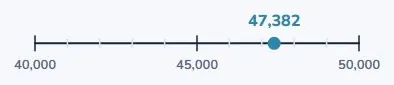
| 47,382 | nearest ten | 47,380 |
| 47,382 | nearest hundred | 47,400 |
| 47,382 | nearest thousand | 47,000 |
| 47,382 | nearest ten thousand | 50,000 |
Watch the ten thousands one
- 47,382 to the nearest ten thousand is 50,000.
- The 7 rounds the 4 up to 5.
- Everything to the right becomes zero.
Rounding a decimal
- Exactly the same rule, further right.
- 3.267 to the nearest hundredth is 3.27.
- To the nearest whole number it is just 3.
| Number | To the | Becomes |
|---|---|---|
| 3.267 | nearest hundredth | 3.27 |
| 3.267 | nearest tenth | 3.3 |
| 3.267 | nearest whole | 3 |
Estimating 0.73 + 0.8 + 0.19
- Round each one to the nearest tenth.
- 0.7 + 0.8 + 0.2 is 1.7.
- So the real answer should be near 1.7.
| Working | Answer | |
|---|---|---|
| Estimate | 0.7 + 0.8 + 0.2 | 1.7 |
| Exact | 0.73 + 0.8 + 0.19 | 1.72 |
| Close? | yes, so the answer is sensible |
What an estimate catches
- It will not catch a small slip.
- It catches the big ones: a lost decimal point.
- If you got 17.2, the estimate says look again.
| Answer | Against 1.7 | |
|---|---|---|
| 1.72 | close | sensible |
| 17.2 | ten times out | check it |
| 0.172 | ten times small | check it |
327 ÷ 5
- Five goes into 32 six times, with 2 left.
- Five goes into 27 five times, with 2 left.
- 65, and 2 left over.
| Step | Working |
|---|---|
| 32 ÷ 5 | 6, remainder 2 |
| carry the 2 | 27 ÷ 5 |
| 27 ÷ 5 | 5, remainder 2 |
| So far | 65 remainder 2 |
Three ways to say what is left
- 65 remainder 2. Or 65 and two fifths.
- Or 65.4, because two fifths is 0.4.
- All the same answer. The question picks the form.
| Form | Answer | Good for |
|---|---|---|
| Whole number | 65 remainder 2 | how many buses |
| Fraction | 65 and 2/5 | how much pizza |
| Decimal | 65.4 | how many dollars |
Your turn: four questions
- Pause here and try all four.
- On question 1, do the exponent before anything else.
- On question 3, estimate before you decide.
| Question | |
|---|---|
| 1 | Work out 6 + 2 × 3². |
| 2 | Round 58,461 to the nearest thousand. |
| 3 | Estimate 2.9 × 4.1. Is 11.89 reasonable? |
| 4 | Work out 419 ÷ 8 as a decimal. |
Show answer
1. 24. Exponents first: 3² = 9. Then 2 × 9 = 18. Then 6 + 18 = 24. 2. 58,000, because 461 is less than 500. 3. About 3 × 4 = 12, so 11.89 is very reasonable, and it is exact. 4. 52.375. 8 × 52 = 416, remainder 3, and 3/8 = 0.375.
The answers
- 3² = 9 first, so 6 + 18 = 24.
- 58,461 rounds to 58,000. And 11.89 is fine: 3 × 4 is 12.
- 419 ÷ 8 is 52.375.
| Answer | |
|---|---|
| 1 | 6 + 2 × 9 = 24 |
| 2 | 58,000 |
| 3 | estimate 12, so yes, 11.89 is reasonable |
| 4 | 52.375 |
What to take away
- GEMA: grouped, exponents, multiplicative, additive.
- The last two are pairs worked left to right.
- Estimate first, and let it check the answer you get.
| Remember | |
|---|---|
| GEMA | grouped, exponents, multiplicative, additive |
| × and ÷ | together, left to right; not all ÷ first |
| + and − | together, left to right |
| Estimate first | then check your answer is close |
| Remainders | whole, fraction or decimal: the context decides |
Is your child on track?
Take the free placement test