Order of operations, estimating and remainders
What this lesson covers
- Rounding, estimation, and using benchmarks support comparing numbers and checking whether findings are reasonable.
- Division can result in a remainder expressed as a whole number, fraction, or decimal.
- In expressions that have more than one operation, the order of operations is important.
- A mnemonic, such as GEMA: grouped, exponents, multiplicative (× and ÷), and additive (+ and −) can be used to remember the order of operations.
Two people, one sum, two answers
- Work out 3 + 4 × 2.
- Straight along the line you get 14.
- Somebody else gets 11. One of you is wrong.
| Method | Working | Gets |
|---|---|---|
| Left to right | 3 + 4 = 7, then 7 × 2 | 14 |
| By the rules | 4 × 2 = 8, then 3 + 8 | 11 |
The order everything follows
- Grouped, exponents, multiplicative, additive. GEMA.
- You may have met BEDMAS. It is the same order.
- GEMA is safer, because M and A each name a pair.
| Stands for | Meaning | |
|---|---|---|
| G | Grouped | anything inside brackets |
| E | Exponents | squares, cubes, roots |
| M | Multiplicative | × and ÷, left to right |
| A | Additive | + and −, left to right |
G: brackets go first, always
- Anything inside brackets is settled before anything else.
- 3 + 4 × 2 is 11. But (3 + 4) × 2 is 14.
- Brackets are how you overrule the order on purpose.
| Expression | Why | Answer |
|---|---|---|
| 3 + 4 × 2 | no brackets | 11 |
| (3 + 4) × 2 | brackets first | 14 |
| Same digits | different instruction |
E: then squares, cubes and roots
- An exponent is settled before any × or ÷ touches it.
- In 3² × 2, the 3² becomes 9 first.
- Then 9 × 2. Never 3 × 2 squared.
| Expression | Step | Becomes |
|---|---|---|
| 3² × 2 | square the 3 | 9 × 2 |
| then multiply | 18 | |
| Not | (3 × 2)² | 36 |
M: and here is where people slip
- × and ÷ do not take turns. They rank equally.
- So you go left to right. 20 ÷ 4 × 5 starts with 20 ÷ 4.
- That is 5, then 5 × 5 is 25. Not 1.
| Step | Why | Gives |
|---|---|---|
| 20 ÷ 4 × 5 | left to right | |
| 20 ÷ 4 | first, because it is leftmost | 5 |
| 5 × 5 | then this | 25 |
| Common error | doing 4 × 5 first gives | 1 |
A: exactly the same trap
- + and − also rank equally, so also left to right.
- 10 − 3 + 2 starts with 10 − 3, which is 7.
- Then 7 + 2 is 9. Adding first would give 5.
| Step | Why | Gives |
|---|---|---|
| 10 − 3 + 2 | left to right | |
| 10 − 3 | first | 7 |
| 7 + 2 | then | 9 |
| Common error | doing 3 + 2 first gives | 5 |
All four letters at once
- 2 + 3² × 2. No brackets, so start at E.
- 3² is 9, giving 2 + 9 × 2.
- M next: 9 × 2 is 18. Then A: 2 + 18 = 20.
| Expression | Step | Becomes |
|---|---|---|
| 2 + 3² × 2 | E: 3² = 9 | 2 + 9 × 2 |
| M: 9 × 2 = 18 | 2 + 18 | |
| A: add | 20 |
Try it: one tier at a time
When the answer goes below zero
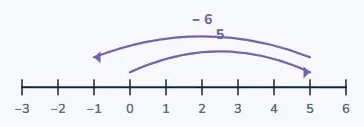
- 5 − 2 × 3. The multiplication is first.
- 2 × 3 is 6, so this is 5 − 6.
- Which is −1. Order of operations does not avoid negatives.
Now: knowing the answer before you get it
- A calculator will happily return a wrong answer.
- It cannot tell you that you typed 147 instead of 14.7.
- So decide roughly what it must be, first.
| Catches | |
|---|---|
| A rough guess | nothing much |
| An upper and lower bound | a misplaced decimal point |
| Nothing at all | nothing |
Trapping 14.7 × 5 between two easy sums
- 14.7 is between 14 and 15.
- 14 × 5 is 70. 15 × 5 is 75.
- So the answer must be between 70 and 75. It is 73.5.
| Benchmark | Compared | Value |
|---|---|---|
| 14 × 5 | too small | 70 |
| 15 × 5 | too big | 75 |
| So 14.7 × 5 | must be between them | 70 to 75 |
| Actual | 73.5 |
Rounding to any power of ten
- 4728 to the nearest 10 is 4730.
- To the nearest 100 it is 4700.
- To the nearest 1000 it is 5000. The 7 rounds the 4 up.
| Number | To the | Becomes |
|---|---|---|
| 4728 | nearest 10 | 4730 |
| 4728 | nearest 100 | 4700 |
| 4728 | nearest 1000 | 5000 |
Try it: round to a power of ten
And to any decimal place
- Same method, going the other way down the ladder.
- 3.14159 to a tenth is 3.1, to a hundredth 3.14.
- To a thousandth, 3.142. Look at the digit just past.
| Number | To the | Becomes |
|---|---|---|
| 3.14159 | nearest whole | 3 |
| 3.14159 | nearest tenth | 3.1 |
| 3.14159 | nearest hundredth | 3.14 |
| 3.14159 | nearest thousandth | 3.142 |
The zero you have to write
- Round 2.798 to the nearest hundredth.
- The 8 rounds 9 up to 10, which carries. You get 2.80.
- Write the zero. 2.8 is the same value but shows no hundredths.
| Answer | Shows | Verdict |
|---|---|---|
| 2.80 | hundredths, as asked | right |
| 2.8 | tenths only | marked wrong |
Dividing when it does not go evenly
- 327 ÷ 15. How many 15s fit into 327?
- 15 × 20 is 300, and one more 15 makes 315.
- So 21 of them, with 12 left over.
| Form | Working | Answer |
|---|---|---|
| Whole number | 15 × 21 = 315, 12 left over | 21 r 12 |
Three ways to write what is left over
- As a whole number: 21 remainder 12.
- As a fraction: 12 out of 15 is 4/5, so 21 4/5.
- As a decimal: 4/5 is 0.8, so 21.8. All three are right.
| Form | Working | Answer |
|---|---|---|
| Whole number | 15 × 21 = 315, 12 left over | 21 r 12 |
| Fraction | 12 out of 15 is 4/5 | 21 4/5 |
| Decimal | 4/5 is 0.8 | 21.8 |
Which one the question wants
- Buses for 327 people: you cannot run 0.8 of a bus. 22.
- Sharing $327: money wants the decimal.
- Cutting 327 cm: the fraction is exact. Read the context.
| Situation | Why | Use |
|---|---|---|
| Buses for 327 people | you cannot run 0.8 of a bus | 22 buses |
| Sharing $327 | money takes decimals | $21.80 |
| Cutting 327 cm | a fraction is exact | 21 4/5 cm |
Common mistakes
- 3 + 4 × 2 = 14Multiplication comes before addition, so 4 × 2 = 8 first, then 3 + 8 = 11.
- 20 ÷ 4 × 5 = 1× and ÷ rank equally, so go left to right: 20 ÷ 4 = 5, then 5 × 5 = 25.
- 10 − 3 + 2 = 5+ and − rank equally, so go left to right: 10 − 3 = 7, then 7 + 2 = 9.
- 327 ÷ 15 = 21 r 12, so as a decimal it is 21.12The remainder is 12 out of 15, so 327 ÷ 15 = 21 12/15 = 21 4/5 = 21.8.
Your turn: four questions
- Question 2 is the left-to-right one. Take your time.
- Question 3 wants two decimal places in the answer.
1
Work out 6 + 2 × 5.
2
Work out 18 ÷ 3 × 2.
3
Round 2.798 to the nearest hundredth.
4
Work out 50 ÷ 8, three ways.
Show answer
1. 16. The multiplication goes first: 2 × 5 = 10, then 6 + 10. 2. 12. Left to right, so 18 ÷ 3 = 6 first, then 6 × 2. Doing 3 × 2 first gives 3, which is the error this lesson is built around. 3. 2.80. The 8 in the thousandths rounds the hundredths up from 9 to 10, which carries. Write the trailing zero: 2.8 is the same value but does not show hundredths. 4. 6 remainder 2, or 6 1/4, or 6.25.
The answers
- 6 + 2 × 5 is 16, because 2 × 5 goes first.
- 18 ÷ 3 × 2 is 12, left to right. Not 3.
- 2.798 to a hundredth is 2.80. And 50 ÷ 8 is 6.25.
| Answer | |
|---|---|
| 1 | 16 |
| 2 | 12 |
| 3 | 2.80 |
| 4 | 6 r 2, or 6 1/4, or 6.25 |
What to take away
- GEMA, and the M and A each cover a pair that runs left to right.
- Bracket an answer above and below before you calculate it.
- A remainder has three forms. The context picks one.
| Remember | |
|---|---|
| GEMA | grouped, exponents, multiplicative, additive |
| M and A | each name a pair, and pairs run left to right |
| Brackets | the only way to overrule the order |
| Estimate | bracket it above and below, then calculate |
| A remainder | whole, fraction or decimal, as the question needs |
Practise this
Worksheet with answersWithout answersDownload PDF
Report a mistake
More in Number
 Powers of ten, in both directions7 min
 Powers, roots and prime factors7 min
 Integers: below zero and back again7 minOrder of operations, estimating and remainders8 min
 Fractions, decimals and percentages7 min
 Decimals, fractions of amounts, and working backwards7 min
 Ratios, and finding the whole from a part7 min
 Comparing money plans, and taking a discount off7 min
Is your child on track?
Take the free placement test